
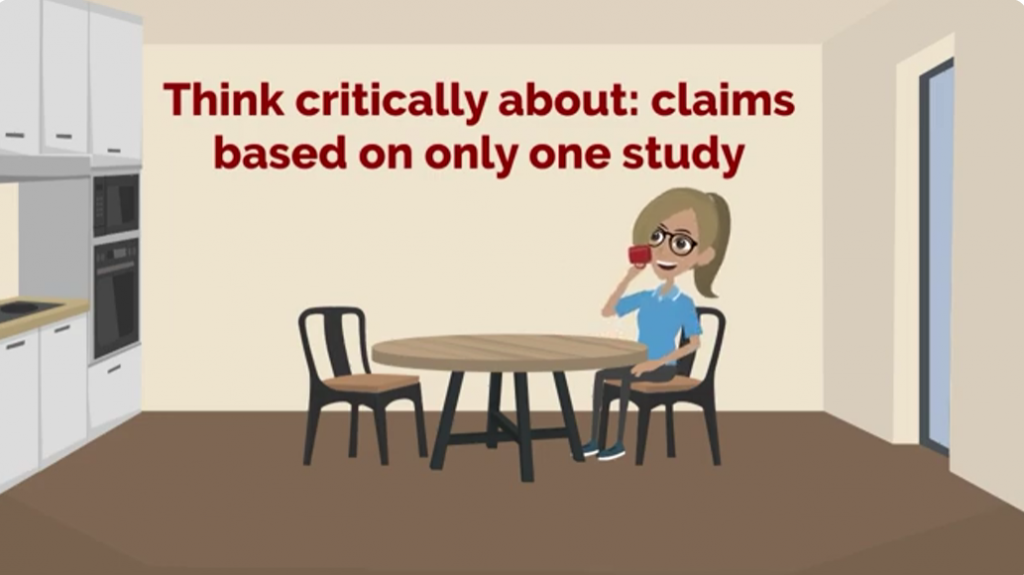
Learning outcome: In this film, you will learn about evidence summaries and that a single research study is not a sufficient basis for drawing conclusions about the advantages and disadvantages of a treatment method.
Target audience: The film is designed for bachelor-level students as its primary audience, but it may also be relevant for teaching students at the lower secondary and upper secondary school levels.
Critical thinking about evaluation research: how to study intervention effects in health, education and social sciences
Learning outcome: In this film, you will learn about evaluation research and how to study the effects of interventions in health, education, and social sciences. The film provides an introduction to experimental and observational studies.
Target audience: The resource is designed for bachelor-level students as its primary audience, but it may also be relevant for teaching upper secondary students as well as master’s students, depending on their prior knowledge.
Critical thinking about evaluation research: how to assess the quality of evidence in health, education and social sciences

Learning outcome: In this film, you will learn how we assess the quality of evaluation research on the effects of interventions in health, education, and social sciences. The film presents key principles that can be applied in such assessments:
- interventions should be compared;
- comparison groups should be similar;
- participants’ and researchers’ assumptions about the expected effect should not influence the results; and
- outcomes should be measured consistently, and all participants should be accounted for.
Target audience: The resource is designed for bachelor-level students as its primary audience, but it may also be relevant for teaching master’s students.
Critical thinking about summarised research: how to assess the quality of systematic reviews

Learning outcome: In this film, you will learn about the quality criteria you should look for when assessing the reliability of evidence summaries on the effects of interventions (systematic reviews).
Target audience: The film is based on international guidelines for good practice and is relevant for all students who need to learn how to use summarized research in their studies—from bachelor to Ph.D. level.
Critical thinking about benefits and harms: making informed decisions about interventions in health, education and social sciences
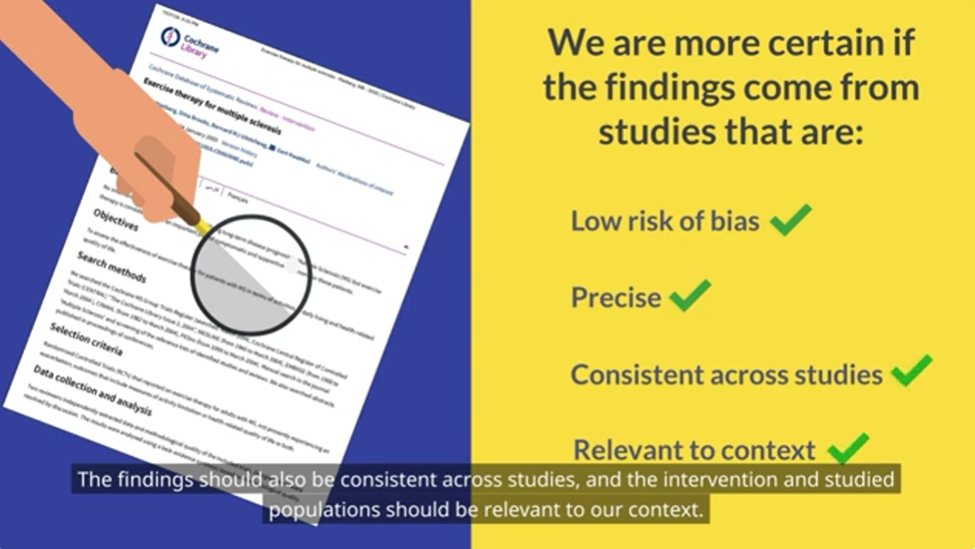
Learning outcome: In this film, you will learn what to consider when deciding whether to implement an intervention. The resource is interdisciplinary and suitable for students in fields such as education, health sciences, technology, and social sciences.
The film introduces the principle of scientific uncertainty, the methodology for assessing such uncertainty (GRADE), the idea that all interventions may have both advantages and disadvantages, the principle of strong and weak recommendations in guidelines, and the importance of viewing knowledge in light of context and current needs.
Target audience: The film is relevant for all students who need to learn how to use summarized research in their studies — from bachelor’s to Ph.D. level
Understanding intervention effects and their importance
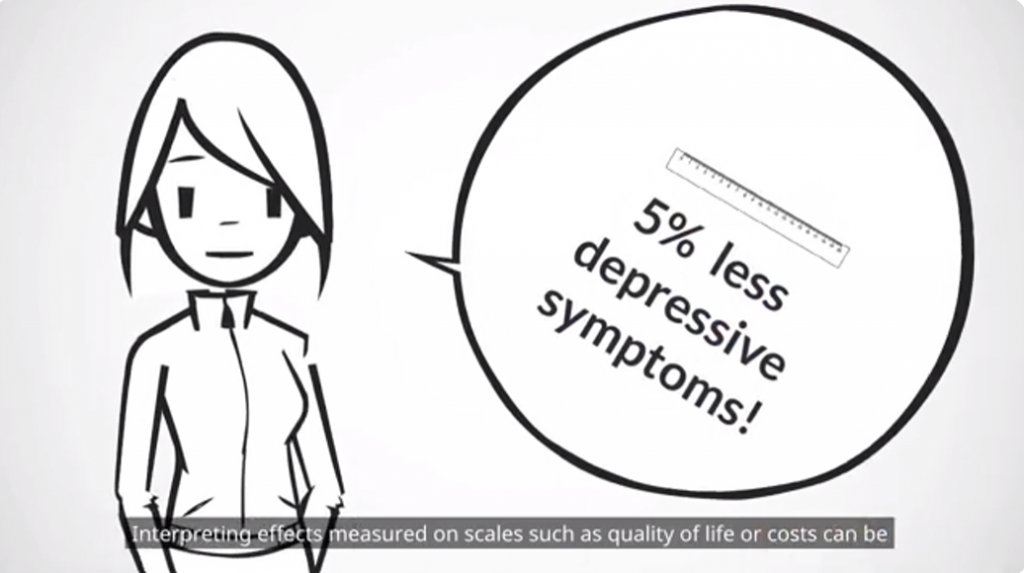
Learning outcome: This video provides an introduction to interpreting precision and understanding the meaning of statistical significance.
Target audience: This resource is suitable for students in higher education or for professionals in services that use research in their work.
What is evidence-based practice?

Learning outcome: This film provides an introduction to evidence-based practice and describes how healthcare professionals can use this approach to make informed decisions together with the patient.
Target audience: Students in health and social care programs at upper secondary school, as well as students in higher education.